What makes animation an effective learning tool
When we need to share important information, the way we share it matters just as much as the information itself. Some people read, some people listen, but almost everyone understands something better when they can see it.
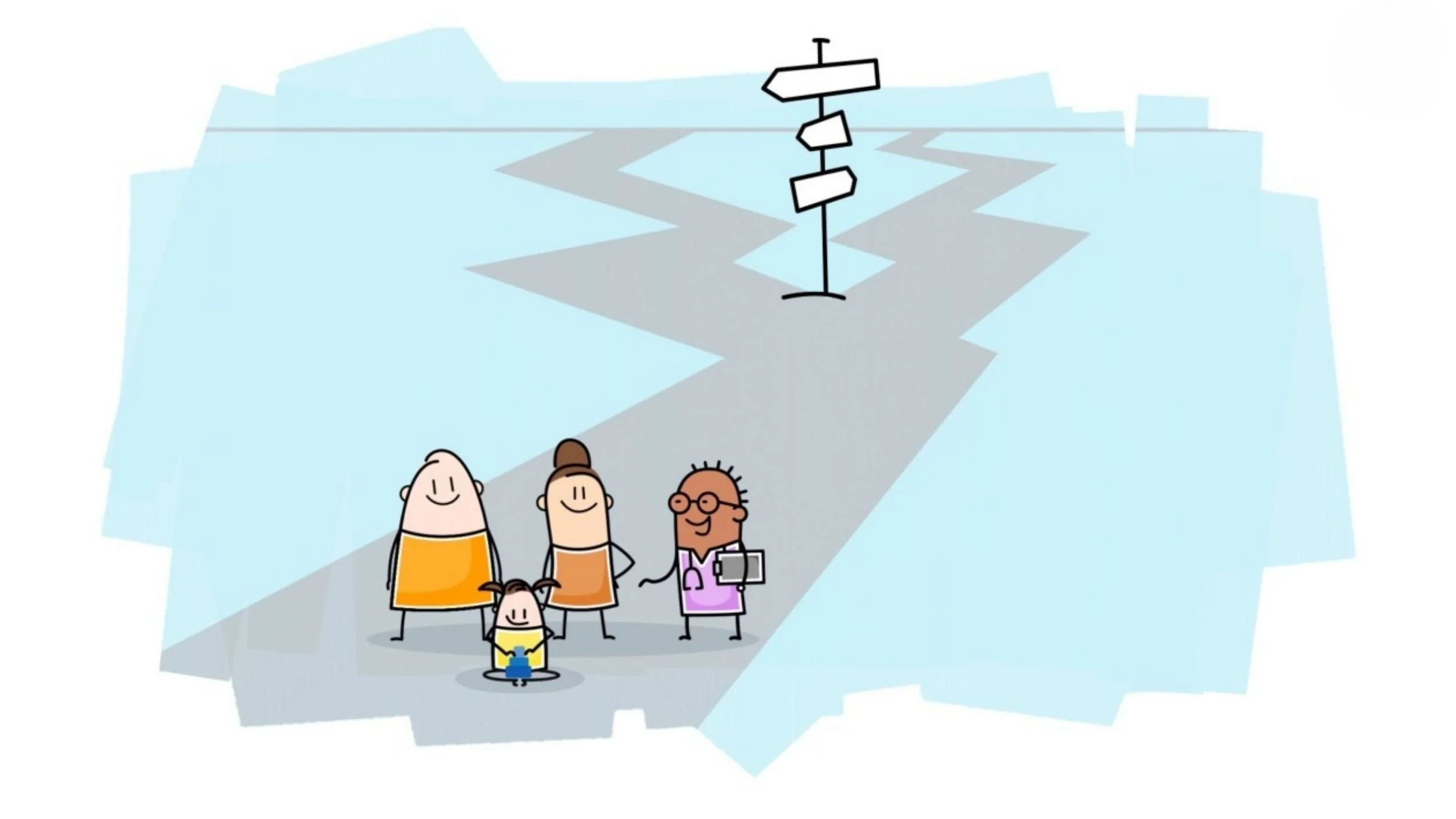
We live in a time where people are busier than ever and attention is harder to hold; written documents and long texts simply struggle to keep up with.
This is why animation has become one of the most effective ways to communicate and share knowledge, especially in healthcare, social care, safeguarding, research, e-learning, and emergency services.
People learn faster
Our brains take in pictures 10x times faster than words. In the healthcare industry, people are already under pressure, which makes it very hard to absorb information from long documents. This is especially true when it comes to healthcare, social care, and safeguarding, where the information being shared can be complex and hard to take in through text alone.
Animation cuts through that.
It gets the message across quickly and clearly, without adding to the stress. Moreover, animated training helps staff build that knowledge faster and more confidently than reading a manual ever could. In e-learning, it means students and professionals can complete training in less time without missing any of the important details.
Everyone can understand it
Most people who come into contact with healthcare or social care services are likely already worried or stressed. Long documents full of medical or legal words can be confusing and off-putting. Animation removes that barrier. It explains things in a way that anyone can follow, no matter their background, reading level, or experience with the topic.
This is especially important in safeguarding, where the people receiving information may be vulnerable, young, or going through a very difficult time. A simple, friendly animated video can explain their rights, what support is available, and what will happen next without overwhelming them.
In public health, animation can reach wide and diverse communities – including people whose first language is not English – by using visuals that go beyond words.
It can make things real and connected
It’s hard to prepare for something you’ve never been through before. If someone reads about a medical procedure or a safeguarding situation on paper, it can feel distant and easy to ignore. Think about it this way: even if someone warns you about something dangerous and you genuinely care about what they are saying, you may still forget it later. Not because you weren’t listening, but because you can’t picture it.
Without a visual connection to the situation, the information simply doesn’t stick.
This is why text alone often falls short. People forget information that has no connection to their own experience. But animation changes that. It gives people something to picture. It places the viewer inside the situation, showing them what it looks like and how it plays out even if they have never been through it themselves.
In healthcare, social care and safeguarding, this is incredibly valuable. It helps people understand what to expect, recognise situations when they arise, and take the right action when it matters most.
A short, animated video showing what happens before, during, and after a procedure can reduce patient anxiety and improve their experience. In research, complex findings can be turned into simple visuals that help the public or policymakers understand the results without needing a scientific background.
It saves time and money
For organisations, animation is a smart long-term investment. One well-made video about a health process, safety procedure, or emergency response can be used over and over again. It can replace printed leaflets, reduce the need for repeated face-to-face briefings, and can be easily updated when information changes. This saves both time and money in the long run.
Think about how many hours healthcare staff spend explaining the same processes to new patients or new colleagues. An animated video can do that job consistently, at any time, without taking anyone away from their other responsibilities.
For safeguarding teams, a short video shared online can reach far more people than a leaflet ever would.
It can cover sensitive topics with care
Some subjects are very difficult to talk about or read about directly. Safeguarding, mental health, abuse, neglect, and end-of-life care are all areas where people can feel uncomfortable or might even shut down when faced with heavy text or clinical language.
Animation allows these topics to be approached in a gentler, more thoughtful way. It creates a safe distance that makes it easier for people to take in the information without feeling overwhelmed or judged.
For young people learning about staying safe, or for adults learning to recognise the signs of abuse, a carefully made animated video can open conversations that might otherwise never happen.
It works across many formats and platforms
One of the great practical benefits of animation is how flexible it is. The same animated content can be shown on a screen in a waiting room, shared on a website, included in an e-learning course, sent by email, or posted on social media.
Organisations in healthcare and emergency services can reach patients, staff, and the public through one piece of content across many different channels. This is especially valuable for research organisations that want to share their findings with a wider audience, or for public health bodies running awareness campaigns.
FAQ: Everything you need to know about using animation as an effective learning tool
-
Animation combines visuals, movement and storytelling to make complex information easier to understand and remember. It helps people process information more quickly than text alone, making it particularly useful for training, patient education and public awareness campaigns.
-
Animation is especially effective in healthcare, social care, safeguarding, research, education and emergency services. It's ideal for explaining complex processes, communicating sensitive topics and delivering consistent training to diverse audiences.
-
Yes. By presenting information visually and placing it in a real-world context, animation helps people build stronger mental connections. This makes key messages more memorable and increases the likelihood that viewers will recall and apply what they've learned.
-
Absolutely. Animation can communicate topics such as mental health, safeguarding, abuse, end-of-life care and medical procedures in a compassionate, accessible way. It creates a safe, non-threatening environment that encourages understanding without overwhelming the audience.
-
A professionally produced animation can be reused across websites, e-learning platforms, waiting rooms, presentations and social media. It delivers consistent messaging, reduces the need for repeated face-to-face training, and can often be updated more easily than printed materials, making it a cost-effective long-term communication tool.
Ready to make your complex information easier to understand?
If any of this resonates with you, whether you work in healthcare, social care, safeguarding or another people-focused sector, we'd love to hear from you!
Tell us how you're currently communicating with patients, service users, staff or the public, and together we can explore whether animation could help you explain more clearly, engage more effectively and create lasting understanding.
(Originally posted 05/06/26 on LinkedIn: The Healthcare Animation Brief)